Why 8 Mile Shows a PG Version of Eminem: Jimmy Smith Jr. vs Slim Shady Unleashed
Rewatching 8 Mile after listening to The Marshall Mathers LP or The Eminem Show is like stepping into a parallel universe. The film shows a restrained, introspective character while Eminem's music revealed the most controversial voice in pop culture.
By @bradleymines ·
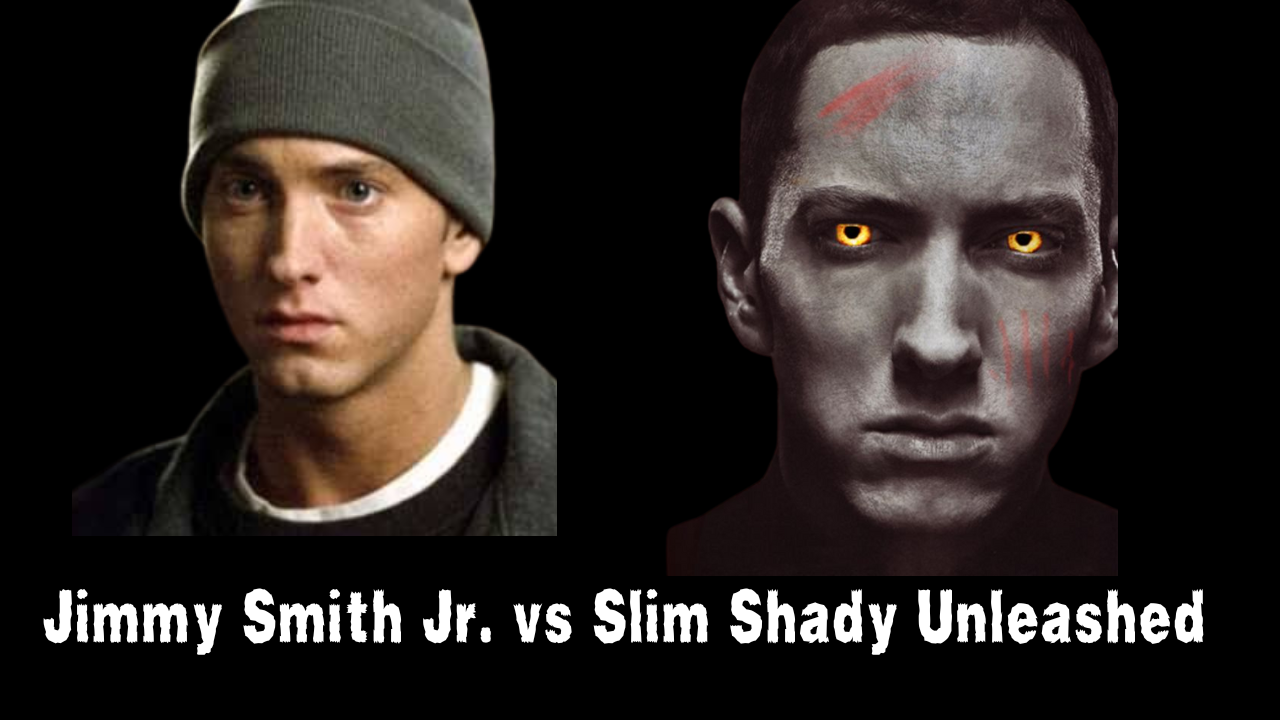
Rewatching 8 Mile after listening to The Marshall Mathers LP or The Eminem Show is like stepping into a parallel universe. In the film, Eminem appears restrained, quiet, introspective, weighed down by insecurity and responsibility. But in the music he was releasing at that exact time, he was the most controversial and explicit voice in American pop culture. The contrast is so sharp that first-time viewers almost assume the film was made years before his most explosive material, not months after it.
The Two Eminems
The truth is simple: the Eminem we meet in 8 Mile is a deliberately softened, PG-friendly variation of a man whose real artistic identity had become too dangerous, too raunchy, and too volatile to replicate on screen. And part of the reason the movie feels toned down is because every major character around him is also a softened, fictionalized version of someone from his real life. The result is a polished narrative universe built from real Detroit grit, but scrubbed clean enough to become award-winning Hollywood drama.
To understand why the movie looks the way it does, you have to understand the two Em's that existed in 2000–2002. The first was Marshall Mathers, a real person navigating divorce, poverty, addiction, fame, and fatherhood. The second was Slim Shady, a hyper-violent, provocative alter ego who existed primarily in music, where satire, exaggeration, and shock value could be absorbed by listeners as performance rather than literal confession. Hollywood has no such safety net. A lyric that sounds like dark humor becomes a "depiction of violence." A graphic metaphor becomes "material unfit for R-rating." A diss becomes defamation. The persona that worked perfectly on record simply could not survive within the rules of mainstream cinema, which is why the character he plays in 8 Mile, Jimmy Smith Jr., is not just toned down, but fundamentally reconstructed.
Jimmy Smith Jr.: A Reconstructed Character
Jimmy is fearful where Slim Shady is fearless. He freezes on stage where Slim Shady tears it down. He hesitates to confront people who disrespect him, while Slim Shady built entire albums around it. Jimmy swallows his anger; Slim Shady weaponizes it. Jimmy doubts himself; Slim Shady is the most confident villain in rap. The film needed a character whose vulnerability could carry a story, not a persona whose aggression would swallow it.
That softening extended far beyond Eminem. Almost every character in the film is based on someone real, but adjusted, diluted, or partially re-imagined to keep the movie grounded and palatable to a wider audience. The most famous example is Future, played by Mekhi Phifer, who represents Eminem's real-life best friend Proof [Wikipedia]. Proof was one of the most charismatic and energetic figures in the Detroit scene, known for his humor, raw talent, and intense presence. The movie transforms him into a calm, thoughtful anchor who pushes Jimmy toward growth. The real relationship was deeper, wilder, and more chaotic than the movie suggests. But Hollywood needed structure, not volatility.
Sanitized Supporting Characters
The same thing happens with characters like Wink, Papa Doc, Alex, and even Jimmy's mother. Wink is a polished, slightly shady opportunist in the movie, but in reality Eminem dealt with several people with far more aggressive agendas than Wink ever shows. Papa Doc, the clean-cut antagonist of the rap battles, is a sanitized composite of Detroit rivals who were far more explicit, personal, and unforgiving in their battles than anything shown in the film. The rap battles in 8 Mile are intense, but they are nowhere near the level of brutality that Detroit basement cyphers could reach. In real life, opponents didn't hold back, and Eminem didn't either.
Alex, the photographer Jimmy becomes involved with, is a cinematic remix of several relationships Eminem had in his early grind years. The real romantic chaos of Eminem's life at that time involved jealousy, infidelity on both sides, addiction, and scenes so explosive they inspired songs like "Superman," "Puke," and "Say Goodbye Hollywood." There was no way to depict that kind of emotional warfare in a film that was meant to feel grounded, sympathetic, and ultimately inspirational.
The Biggest Transformation: Family Dynamics
The biggest transformation, though, is Jimmy's mother. Kim Basinger plays a woman who is unstable, overwhelmed, and struggling to maintain a household. It's a respectful portrayal, restrained and grounded. But Marshall Mathers' real childhood was significantly more chaotic. Eminem's relationship with his mother was dysfunctional enough to fuel "Cleaning Out My Closet," "My Mom," "Marshall Mathers," and countless interviews where he described emotional instability, lawsuits, and a constant sense of instability. Turning that into a Hollywood-friendly character required sanding down every sharp edge.
And as for Kim Scott, Eminem's ex-wife, the film practically sidesteps her existence entirely. At the time 8 Mile was released, Eminem had already recorded some of the most graphic, disturbing relationship songs in music history. "Kim," arguably the most extreme example of horrorcore storytelling ever released by a major label, would be impossible to translate into a dramatic film without spinning the entire story into a psychological thriller or outright exploitation cinema. The studio avoided this by excluding Kim from the narrative entirely, distributing her emotional role across several characters.
The Sanitized World of Detroit Battle Culture
This sanitization of characters mirrors the sanitization of the world around them. Real Detroit battle culture was raw, explicit, and ruthless. You could hear homophobic slurs, graphic sexual insults, detailed threats, street accusations, and deeply personal attacks. The film captures the energy but strips the lyrics of their most extreme elements. If Eminem had delivered anything close to the content of "Kill You," "Criminal," "Amityville," or "Soldier" on screen, the movie would have instantly landed an NC-17 rating. The MPAA has always been stricter with language and violence when it is spoken or depicted rather than metaphorized in music. The very lyrics that earned Eminem political condemnations, activist protests, and lawsuits would not be permitted in a studio-backed motion picture.
The Timing Paradox
The contrast is even sharper when you realize that 8 Mile was released only months after Eminem dropped The Eminem Show, an album loaded with political fire, personal trauma, and unresolved rage. In that era, Eminem was easily the most controversial pop star alive. He was fighting lawsuits, facing protests from LGBT activists, sparking debates in Congress, and engaging in public battles with media networks. His music was saturated with profanity, violence, and satire aimed directly at celebrities, politicians, journalists, and his own family. To replicate that version of Eminem on film would have drowned the narrative and pushed the movie into territory Hollywood studios simply could not distribute.
Fans looking to explore his evolution can find gems like The Death of Slim Shady (Coup de Grâce), which continues that provocative legacy decades later.
A Deliberate Creative Choice
8 Mile wasn't designed to capture the chaos. It was designed to craft a timeless, inspirational story set against a gritty Detroit backdrop. A movie built to win awards has to be digestible. A Slim Shady biopic would have been incendiary. The film chose realism, humility, and emotional vulnerability, not the provocative shock art Eminem displayed in his music. Jimmy Smith Jr. is a character built for empathy, for slow growth, for a sweeping final battle scene that feels cathartic rather than disturbing. Slim Shady is a character built to provoke, unsettle, and dominate. The two cannot coexist in a traditional narrative.
That's why watching 8 Mile today feels like visiting a parallel version of Marshall Mathers' life where the camera shows only the fight, not the fire. The raunchiness, the violence, the rage, the lawsuits, the tabloid chaos, the political backlash, the unfiltered shock humor—every element that defined Eminem's peak musical years had to be stripped away to make the film workable. What remains is a powerful story, but not the full story.
One version of Eminem made a great movie.
The other version made history.